

Distressed Hospitality Assets: Unlocking Value in European Hotels
Investing in distressed hospitality assets across Europe presents significant opportunities for specialized debt funds. This article details the key drivers of distress within the European hospitality real estate sector, including macroeconomic pressures and evolving travel patterns. It outlines strategic workout and asset repositioning strategies essential for maximizing value in underperforming hotels. Readers will gain insights into effective hotel valuation methodologies and deal structuring for hotel NPLs, preparing them to capitalize on the sector’s future outlook and recovery potential.
DDTalks specializes in facilitating high-value deal-making and industry networking within European private credit, NPL, and distressed debt markets. Our platform connects institutional investors and workout professionals with critical insights and opportunities in complex financial landscapes.
To explore your options, contact us to schedule your consultation. You can also reach us via: Request Agenda
The current economic climate allows specialized investors to acquire distressed hospitality assets, an increasing focus for European debt funds. This article examines the drivers of distress, workout and repositioning strategies, non-performing hotel valuation, and the sector’s outlook for institutional investors, servicers, and workout professionals in the European market.
Why Are Distressed Hospitality Assets a Target for European Debt Funds?
European debt funds target underperforming hospitality assets because the sector’s high operational leverage and sensitivity to economic cycles create opportunities to acquire fundamentally sound properties at a significant discount. Investors can then generate substantial returns through strategic improvements and capitalizing on market recovery.
Defining Distressed Hospitality: More Than Just Underperforming Hotels
A hotel asset enters a distressed state not just from low occupancy rates but from a combination of factors that render its capital structure unsustainable. This can include an inability to service debt due to rising interest rates, operational inefficiencies leading to negative cash flow, a need for significant capital expenditure that cannot be funded, or a brand that no longer resonates with the target market. The distress is often financial or operational, even if the underlying real estate is in a prime location.
Cyclical Opportunities: Why Downturns Create Value for Investors
The hospitality industry is cyclical, tied to GDP growth, consumer confidence, and corporate travel budgets. During downturns, revenue per available room (RevPAR) can decline sharply, pressuring operators and owners. This cyclicality allows distressed debt investors to acquire assets or their associated debt at a low point in the cycle. Through active management, operational turnarounds, and strategic capital injection, these funds can reposition the asset to capture upside as the market recovers, creating significant equity value.
Navigating the European Hospitality Landscape: Key Drivers of Distress
European hospitality real estate is shaped by macroeconomic pressures and evolving consumer behavior. The current environment involves financial strain and shifting demand dynamics.
Economic Headwinds and Evolving Travel Patterns
Inflation and higher interest rates have increased operating costs and debt service burdens for hotel owners across Europe. Labor shortages and rising wages further compress margins. Travel patterns have also shifted. While leisure demand is resilient, particularly in resort destinations, the corporate travel segment is changing structurally. Remote work and virtual meetings have altered the frequency and nature of business trips, impacting city-center hotels that relied on this segment. This creates a performance gap between hotel asset types.
Regional Nuances: Opportunities and Challenges Across Europe
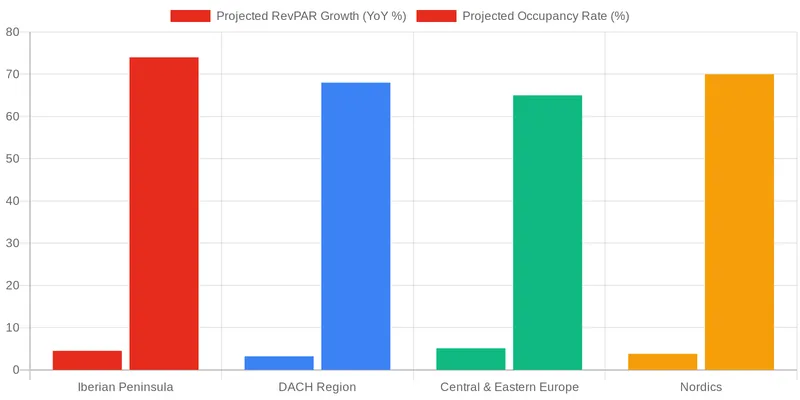
Drivers of distress vary by region. Markets in the Iberian Peninsula benefit from strong international leisure demand but face seasonality challenges. The DACH region (Germany, Austria, Switzerland) has a more stable domestic travel base but is more sensitive to industrial and business cycle fluctuations. Central and Eastern Europe (CEE) markets offer higher growth potential but have different risk profiles related to currency and geopolitical factors. This regional variation is a key theme in distressed real estate investing.
Strategic Workout & Repositioning: Maximizing Value in Distressed Hotels
After acquiring an underperforming hotel, special situations funds use workout strategies to stabilize operations, enhance revenue, and reposition the property for a profitable exit.
Operational Enhancements and Cost Optimization
An initial operational review identifies inefficiencies. This can lead to implementing dynamic pricing to optimize revenue per available room, renegotiating supplier contracts, and investing in technology to streamline back-office functions and improve the guest experience. Enhancing direct booking channels to reduce reliance on online travel agencies (OTAs) is also critical. These improvements can significantly improve net operating income (NOI) before major capital projects begin.
Rebranding, Repositioning, and Capital Investment for Growth
Assets with a dated concept or brand irrelevance require a more intensive approach, ranging from a soft brand refresh to a complete hotel rebranding and affiliation with a major international flag. A full asset repositioning might involve converting a business-focused hotel to an extended-stay or lifestyle concept to match local demand. These initiatives are supported by a Capital Expenditure (CapEx) program to renovate rooms, public areas, and amenities, unlocking the property’s potential and justifying higher room rates.

Valuation & Deal Structuring: Insights for European NPL Funds
Acquiring underperforming hotel debt requires a specialized approach to valuation and deal structuring. Unlike stable commercial real estate, a distressed hotel’s value depends on its future operational performance. Complex deal structures are frequently analyzed by the GPs and LPs at DDTalks events.
Assessing Non-Performing Hotel Loans: Beyond Traditional Metrics
A standard hotel valuation based on historical performance or comparable sales is insufficient for a non-performing asset. Investors must build a forward-looking model incorporating the costs, timeline, and potential upside of their proposed workout plan. This involves a detailed analysis of the local market’s recovery potential, a budget for property improvement plans (PIPs), and projections for occupancy and average daily rate (ADR) post-turnaround. The valuation of a hotel npl is therefore a valuation of a business plan as much as the physical real estate. For more, see these key insights on commercial property market trends.
The Role of Special Situations Funds in Complex Capital Restructuring
Special situations funds excel at these complex transactions. They structure deals that align the interests of various stakeholders, from senior lenders to junior creditors. This may involve acquiring the senior loan at a discount and taking control through a consensual restructuring or a formal insolvency process. According to the European Banking Authority, managing NPLs effectively is critical for financial stability. These funds provide the rescue capital for the turnaround plan, structuring their investment as a mix of debt and equity to optimize the capital stack and maximize their risk-adjusted return.
The Future Outlook for European Hospitality Investment
The European hospitality investment landscape will be defined by evolving travel dynamics and new market opportunities. Despite challenges, the sector’s long-term fundamentals are strong, presenting a case for investors with expertise in managing distressed hospitality assets.
Business vs. Leisure Travel: Shifting Dynamics and Investment Implications
The divergence between leisure and business travel is a key market trend. The recovery in leisure travel trends is expected to remain robust, driven by pent-up demand and experience-focused spending. This favors resort destinations and lifestyle hotels. The business travel recovery is more nuanced; while large corporate events and essential travel are returning, routine internal meetings may be permanently reduced. This structural shift requires investors to re-evaluate assets in business-centric urban locations, potentially repositioning them to attract “bleisure” travelers who combine work and leisure trips.
Emerging Opportunities and Risks in a Transforming Market
Opportunities are emerging from market consolidation as smaller, undercapitalized operators may sell. Growing investor and consumer demand for hotels meeting high ESG (Environmental, Social, and Governance) standards creates value-add opportunities through sustainability-focused renovations. As noted by the UN World Tourism Organization, sustainable tourism is a growing priority. Risks such as geopolitical instability, energy price volatility, and potential economic slowdowns persist. Navigating these factors is critical for success in a market where global real estate is under strain.
Connect with European Distressed Debt Leaders at DDTalks
DDTalks conferences are a platform for senior professionals from special situations funds, NPL servicers, and institutional investment firms to connect, share insights, and originate deals. Get direct access to the decision-makers shaping hospitality investment.
Explore our upcoming events. For information on agendas and networking opportunities, contact us or Request Agenda for our next European forum.
Conclusion
The European hospitality sector offers opportunities for distressed debt and special situations investors. Macroeconomic headwinds create challenges but also opportunities to acquire quality assets at attractive valuations. Success requires disciplined underwriting, hands-on operational improvement, asset repositioning, and an understanding of regional market dynamics. Expert investors can navigate this cycle and unlock value. To engage with leaders in this space, explore DDTalks. Request Agenda for our next event or contact us.
Frequently Asked Questions
Why are distressed hospitality assets a primary target for European debt funds?
European debt funds target underperforming hospitality properties because the sector’s sensitivity to economic cycles allows for acquiring fundamentally sound real estate at a significant discount. Investors can then generate substantial returns by implementing strategic operational improvements, repositioning the asset, and capitalizing on market recovery. This value-add approach is central to distressed investment strategies.
What is the most critical factor when evaluating distressed hospitality assets?
Location is the most critical factor when evaluating a hotel investment opportunity. While operational issues can be resolved and facilities can be renovated through a property improvement plan (PIP), a hotel’s location and its proximity to key demand drivers are permanent. A prime location provides a durable competitive advantage that underpins long-term profitability.
What are common turnaround strategies for underperforming hotel properties?
Common turnaround strategies for distressed hospitality assets include executing a PIP to meet modern brand standards, rebranding to a more suitable flag, and optimizing operational efficiencies to improve net operating income. Aggressive revenue management, cost control, and capital restructuring are also key components of a successful workout plan designed to stabilize the asset.
How has the post-pandemic environment affected the market for distressed hospitality assets?
The pandemic created significant financial stress, leading to an increase in non-performing loans (NPLs) backed by hotels and expanding the pipeline of distressed hospitality assets. This has created a unique window for specialized funds to acquire properties and recapitalize businesses that were viable before the disruption but now require fresh capital and expert management.
What is a typical exit strategy for an investment in a distressed hotel?
The most common exit strategy involves stabilizing the asset’s operations and cash flow over a 3-5 year holding period. Once the property is repositioned and its value is maximized, it is typically sold to a long-term core real estate investor, such as a Real Estate Investment Trust (REIT), insurance company, or pension fund seeking stable, income-producing assets.
How can I connect with experts on European distressed debt and NPLs?
To connect with leading general partners, servicers, and workout professionals, we invite you to our specialized NPL and Distressed Debt Forums. You can learn more about the deal-making opportunities and expert panels by requesting the official agenda for our upcoming European events.




0 Comments