

Future of Private Credit: Navigating European Direct Lending Shifts
The future of private credit in Europe is shaped by evolving direct lending strategies, regulatory shifts, and technological innovation. This article explores how AIFMD II and other regulatory changes are reshaping fund structuring, alongside the increasing demand for sector specialization and ESG integration. It examines the impact of institutional capital on the private debt outlook and the role of fintech in enhancing lending efficiency. Understanding these dynamics is crucial for navigating the complex European private credit landscape and identifying emerging opportunities in areas like asset-backed finance and special situations.
DDTalks provides authoritative insights into European private credit markets, drawing on expertise in direct lending, NPLs, and structured finance. Our content reflects discussions from premium B2B financial conferences, offering a factual perspective on market trends and regulatory impacts.
To explore your options, contact us to schedule your consultation. You can also reach us via: Request Agenda
The European private credit market is transforming, attracting capital by offering flexible financing solutions where traditional lenders have retreated. This article explores direct lending strategies, the impact of regulatory shifts like AIFMD II, and technological innovations shaping the market for 2026 and beyond.
What Key Themes Will Define the Future of European Private Credit?
Four themes define the future of European private debt: increasing sector specialization, mandatory ESG integration, regulatory evolution, and financial technology adoption. These forces are reshaping risk assessment, capital allocation, and operational efficiency for fund managers and investors.
- Sector Specialization: Generalist approaches are giving way to focused strategies in resilient and high-growth sectors like technology, healthcare, and renewable infrastructure.
- ESG Integration: Environmental, Social, and Governance criteria are no longer optional but a core component of due diligence, risk management, and value creation.
- Regulatory Adaptation: Directives such as AIFMD II are introducing new rules for fund operations, leverage, and reporting, demanding greater sophistication from managers.
- Technological Adoption: Fintech solutions, including AI and data analytics, are enhancing underwriting precision and streamlining portfolio management.
The Rise of Sector Specialization and Niche Strategies
General Partners (GPs) are developing deep expertise in specific industries for a competitive edge. This specialization allows for more accurate risk pricing, better-structured covenants, and value-add partnerships with portfolio companies. Niche strategies are also gaining traction. Asset-backed finance (ABF) provides working capital solutions, while special situations funds capitalize on market dislocations and complex corporate needs, offering investors differentiated returns.
ESG Integration as a Core Lending Principle
Driven by Limited Partner (LP) mandates and risk analysis, ESG integration is now central to investment analysis. Lenders embed ESG metrics into due diligence and loan documentation, often through sustainability-linked loans that tie interest rates to specific ESG targets. This mitigates long-term risks like regulatory and reputational damage and identifies opportunities to support businesses with strong sustainability profiles. For more detail, see our guide on ESG integration in European private credit strategies.
How AIFMD II and Regulatory Shifts are Reshaping Fund Structuring
European regulation shapes fund structures and operational models. The Alternative Investment Fund Managers Directive II (AIFMD II) introduces new compliance and strategic considerations for managers. The changes enhance investor protection and systemic risk monitoring but require significant adjustments from market participants.
Navigating AIFMD II’s Impact on Fund Operations and Reporting
AIFMD II changes loan-originating funds, impacting leverage, liquidity management, and risk diversification. Managers must implement policies to manage potential liquidity mismatches and are subject to stricter reporting requirements to national competent authorities. The directive also introduces measures to prevent conflicts of interest and ensure originated loans are not solely for resale on secondary markets. Adapting requires investment in compliance infrastructure and proactive fund structuring. A deeper analysis can be found in our article on the impact of AIFMD II on European funds.
Cross-Border Lending and Harmonization Challenges
Legal and regulatory differences persist between EU member states, complicating cross-border direct lending. Insolvency regimes, security enforcement, and withholding tax treatment vary widely, from the Iberian Peninsula to the DACH region. While the Capital Markets Union aims for harmonization, fund managers must navigate this fragmented landscape. This necessitates local expertise or partnerships with legal advisors to structure deals and manage jurisdictional risk. Our definitive guide to European private credit explores these regional dynamics.
The Evolving Landscape of Direct Lending Strategies in Europe
Direct lending is the cornerstone of European private credit, but strategies are becoming more sophisticated and responsive to macroeconomic conditions. Fund managers are adapting to interest rate volatility, inflationary pressures, and the financing needs of middle-market companies across Europe.
Adapting to Interest Rate Volatility and Inflationary Pressures
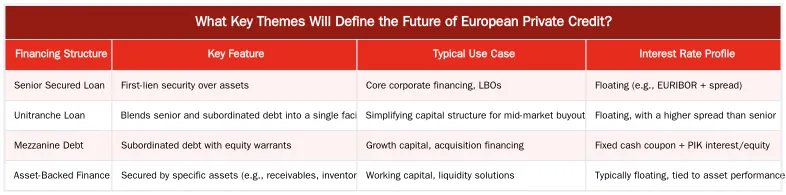
The end of the low-interest-rate environment has altered lending. Floating-rate structures, common in direct lending, protect lenders’ returns but pressure borrowers’ debt service capacity. Lenders are employing rigorous stress testing and offering flexible structures like payment-in-kind (PIK) interest options. Structuring bespoke solutions that balance lender protection with borrower viability is a key differentiator.
Growth in Asset-Backed Finance (ABF) and Special Situations
Demand for non-dilutive, flexible capital has fueled growth in Asset-Backed Finance. Companies use their receivables, inventory, and other tangible assets to secure financing, especially when traditional cash-flow-based lending is constrained. Economic uncertainty creates opportunities for special situations funds, which provide capital to companies facing stress, distress, or complex transitional events. Markets in Southern Europe (Spain, Italy) and Central and Eastern Europe (CEE) present opportunities in this space.
How Institutional Capital is Shaping the Private Debt Outlook
The growth and institutionalization of European private credit are driven by the allocation decisions of LPs like pension funds, insurance companies, and sovereign wealth funds. Their demand for stable, income-generating assets with low correlation to public markets supports the private debt outlook.
LP Allocation Trends and Return Expectations
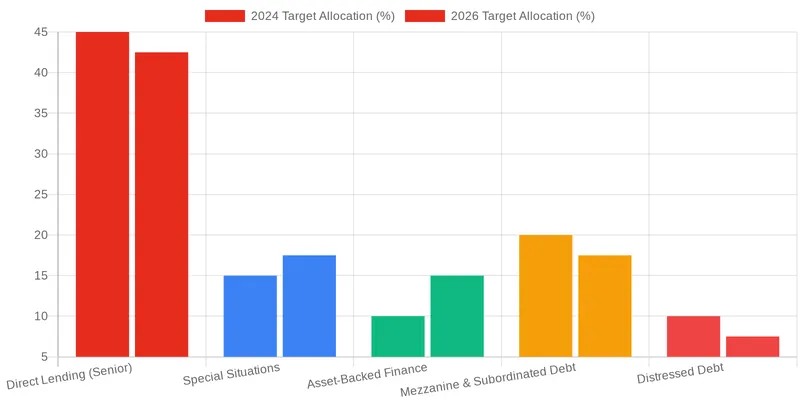
Data from analysts like Preqin shows institutional investors are increasing target allocations to private debt, attracted by its risk-adjusted returns and illiquidity premium. LPs are becoming more discerning, favoring managers with proven track records, deep sector expertise, and strong ESG frameworks. While senior secured direct lending remains the largest strategy, investors are allocating more capital to higher-yielding strategies like special situations and asset-backed finance to diversify portfolios and enhance returns.
The Role of Conferences in Facilitating GP-LP Deal-Making
In a market built on relationships, industry gatherings are indispensable. Events organized by DDTalks provide a forum where GPs and institutional LPs converge. These conferences facilitate dialogue on strategy, performance, and market trends. Discussions during panels and networking, often with insights from firms like Blackstone, Ares Management, and Goldman Sachs, shape investment theses and lead to capital commitments and deal-making. They offer a platform for due diligence and partnership building essential for market growth.
Technology and Fintech: Driving Innovation in European Lending
Technology is a core driver of efficiency and competitive advantage in private credit. From origination and underwriting to portfolio monitoring and fund administration, fintech enables managers to operate more effectively, manage risk more precisely, and deliver value to borrowers and investors.
AI and Data Analytics in Underwriting and Risk Assessment
Artificial intelligence (AI) and machine learning algorithms transform credit underwriting. By analyzing vast datasets beyond traditional financial statements, lenders can identify subtle risk factors, predict default probabilities with greater accuracy, and monitor covenant compliance in real-time. As noted by experts at firms like EY, this data-driven approach allows faster decision-making and creates more resilient portfolios. It also enables lenders to identify niche markets and proactively source opportunities.
Blockchain and Digitalization for Fund Administration and Transparency
Though in its early stages, blockchain technology could revolutionize the back-office operations of private credit funds. Creating immutable records of loan ownership and transactions could streamline fund administration, simplify secondary market trading, and reduce settlement times. Digitalization through secure data rooms and investor portals enhances transparency. These tools provide LPs with on-demand access to portfolio information, improving communication and the GP-LP relationship.
Frequently Asked Questions
What key themes will define the future of private credit in Europe?
The future of private credit will be shaped by several key themes, including increasing sector specialization in areas like technology and healthcare, and the critical integration of ESG criteria into lending agreements. Furthermore, the adoption of technology for underwriting and the impact of regulatory changes like AIFMD II are pivotal forces defining the market’s evolution.
How will regulation like AIFMD II impact the future of private credit?
Regulation, particularly the AIFMD II directive, will play a crucial role in standardizing fund operations and enhancing investor protection across Europe. This is expected to increase institutional allocation to the asset class, solidifying its mainstream status. However, it will also raise compliance costs for managers navigating the future of private credit.
How are direct lending strategies evolving to meet the demands of the future of private credit?
Direct lending strategies are becoming more sophisticated, moving beyond traditional corporate lending to include asset-backed finance (ABF), NAV lending, and other highly structured solutions. This evolution allows managers to provide capital that is both flexible for borrowers and resilient for investors. This adaptability is essential for the future of private credit as market needs become more complex.
Is ESG integration a temporary trend or a fundamental shift in European private debt?
ESG integration is a fundamental and permanent shift in the private debt landscape. The inclusion of ESG covenants and KPIs into loan agreements is now standard practice, driven by both investor demand and a growing recognition that strong ESG performance correlates with lower credit risk.
How can professionals stay ahead of trends shaping the European private debt market?
Attending industry-leading conferences is essential for staying ahead of market trends and connecting with key decision-makers. These events provide direct access to the thought leaders, deal-makers, and policymakers who are actively shaping direct lending strategies. You can see the specific topics and speakers at our next forum by requesting the agenda.



0 Comments