

Southern Europe NPL: Navigating Distressed Debt Opportunities
The southern europe npl market presents complex investment opportunities across Italy, Spain, Greece, and Portugal. This analysis details the market’s characteristics, driven by bank deleveraging and economic conditions. Readers will gain insights into identifying high-value REO portfolios and understanding regional initiatives like the GACS scheme in Italy. The article also clarifies how legal and regulatory frameworks, including those impacting the `greece npl market` and `portugal distressed debt`, shape asset resolution and deal-making. This overview provides a foundational understanding for navigating distressed debt in the region.
DDTalks provides authoritative insights into European private credit and distressed debt markets. Our content, informed by premier B2B financial conferences, helps institutional investors and servicers navigate complex landscapes and identify strategic opportunities.
To explore your options, contact us to schedule your consultation. You can also reach us via: Request Agenda
The southern europe npl market offers complex opportunities for institutional investors, servicers, and financial advisors. This region, including Italy, Spain, Greece, and Portugal, is a focal point for distressed debt activity driven by bank deleveraging and economic conditions. This analysis covers the market’s characteristics, investment avenues, and the legal and regulatory frameworks shaping deal-making and asset resolution across these jurisdictions.
What Defines the Southern Europe NPL & Distressed Debt Market?
The non-performing loan market in Southern Europe has a substantial volume of distressed assets on bank balance sheets, stemming from past economic downturns. The market includes Italy, Spain, Greece, Portugal, and Cyprus, each with unique non-performing exposures, often weighted towards real estate collateral.
Key Characteristics and Regional Overview
Across the region, banks are divesting significant non-performing loan (NPL) stocks to meet regulatory capital requirements and clean their balance sheets. The composition of these loan books varies, but secured loans backed by commercial and residential real estate are a substantial portion. The `italian npl` market has historically been the largest in Europe by gross book value, while the `greece npl market` has seen significant activity spurred by government initiatives. `portugal distressed debt` and the `cyprus npl ratio` remain key focus areas for specialized investors.
Driving Forces: Bank Deleveraging and Economic Factors
Sustained pressure on financial institutions to deleverage is the primary driver for the active secondary market. Regulatory oversight from the European Central Bank (ECB) and national authorities has mandated stricter provisioning and capital adequacy rules, compelling banks to sell NPL portfolios. This process accelerates asset transfers from originating banks to institutional investors, private equity funds, and specialized credit managers with the expertise and capital for workout and recovery. Economic cycles, interest rate policies, and sector-specific performance influence the creation and resolution of these distressed assets.
Navigating Investment Opportunities in Southern European Distressed Debt
The distressed debt landscape in Southern Europe offers investors diverse opportunities, from direct portfolio acquisitions to real estate asset investments. Understanding available asset classes and government-backed transaction mechanisms is fundamental to a successful investment thesis. These frameworks can significantly influence risk profiles and potential returns.
Identifying High-Value REO Portfolios and Loan Books
Investment opportunities extend beyond loan books. They include secured and unsecured NPL portfolios, unlikely-to-pay (UTP) loans which require more active management, and Real Estate Owned (`REO portfolios`) from foreclosures. Each asset class requires a distinct due diligence process, focusing on collateral valuation, legal enforceability, and operational capacity. Investors can explore opportunities in Spanish NPLs and REOs as a case study.
Understanding Government Support Schemes: GACS and Project Hercules
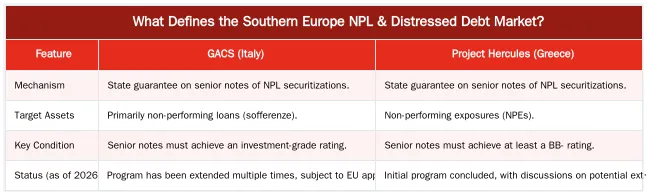
Several Southern European governments have implemented programs to stimulate their NPL markets. Italy’s `GACS scheme` (Garanzia sulla Cartolarizzazione delle Sofferenze) and Greece’s `Project Hercules` Asset Protection Scheme (HAPS) are two prominent examples. These initiatives provide a government guarantee on the senior tranches of NPL securitizations, de-risking the investment for senior noteholders and making transactions more attractive and economically viable.
How Do Legal & Regulatory Frameworks Impact NPL Resolution?
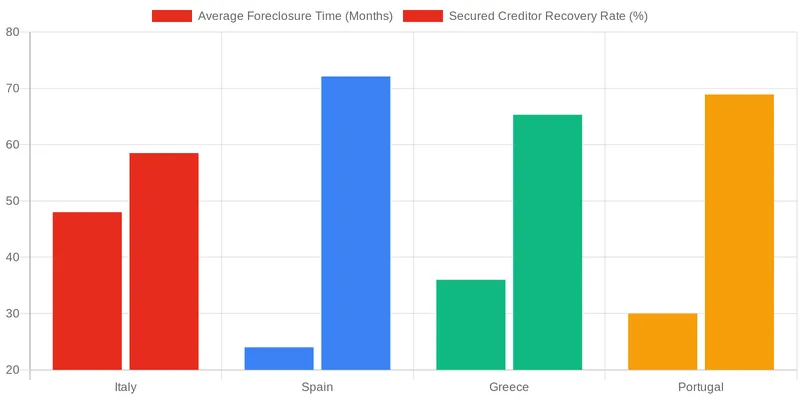
The legal and regulatory environment is the most critical factor influencing the timeline, cost, and success of NPL resolution. Investors must navigate disparate judicial systems, insolvency laws, and enforcement procedures across Southern Europe, which directly impact recovery rates and investment modeling. Understanding these differences is essential for risk management.
Spain, Italy, and Greece: A Comparative Legal Landscape
Each country presents a unique legal challenge. Italy has undertaken reforms to streamline its slow civil justice and insolvency proceedings, yet timelines can still be protracted. The framework for `npl spain` benefits from a relatively efficient foreclosure process, but regional legal variations add complexity. Greece has also implemented reforms to its insolvency code to accelerate procedures and improve creditor rights. These differences make a one-size-fits-all approach ineffective; strategies must be tailored to each jurisdiction’s legal realities.
The Role of Loan Servicing Platforms and Bad Banks
The growth of the secondary NPL market parallels the rise of `loan servicing platforms`. These specialized firms are essential for managing, working out, and recovering distressed assets for investors. Their services range from legal and administrative processing to direct borrower negotiations. In some cases, governments have also established a `bad bank` or state-backed asset management company, such as SAREB in Spain, to absorb toxic assets from the banking system and manage their orderly disposal, improving market liquidity and price discovery.
Expert Insights: Forecasting the Southern European NPL & Distressed Debt Outlook
Industry leaders at financial forums indicate an evolving landscape for the southern europe npl market. While the legacy stock of post-financial crisis NPLs has diminished, new challenges and opportunities are emerging, shaped by the current macroeconomic climate and shifting regulatory priorities. Investors and servicers need a forward-looking perspective to adapt their strategies.
Emerging Trends and Future Challenges
The market is shifting from legacy NPLs to “Stage 2” loans—underperforming assets not yet in default. Higher interest rates and inflationary pressures are expected to increase the flow of these loans, creating new distressed opportunities. Regulators, including the European Banking Authority (EBA), are monitoring these developments. New rules like AIFMD II will add compliance and reporting requirements for fund managers in this space. While Italian banks have reduced non-performing exposures, the rise of UTPs presents the next frontier.
Strategic Approaches for Institutional Investors and Servicers
Success in this mature market requires a nuanced approach. Institutional investors are increasingly forming partnerships with local servicers with on-the-ground expertise and borrower relationships. Strategies are also becoming more specialized, focusing on asset classes like shipping loans, SME corporate debt, or granular residential mortgage portfolios. Due diligence, flexible capital, and an adaptive strategy responsive to macroeconomic and legal changes are paramount for achieving target returns in 2026 and beyond.
Connect with Industry Leaders at Premier NPL & Distressed Debt Forums
Navigating Southern Europe’s distressed debt complexities requires current intelligence and connections with key market players. Participating in focused industry gatherings is the most effective way to gain this edge.
Unlock Deal-Making Opportunities and Expert Perspectives
Events like the European NPL & Distressed Debt Summits and Private Credit Day Iberia provide a platform for investors, servicers, and advisors to connect. These forums offer access to decision-makers and facilitate conversations that drive the market. Engaging with these platforms is essential to deepen understanding and expand networks. Explore The Definitive Guide to Europe’s NPL & Distressed Debt Markets for foundational knowledge.
Conclusion
The Southern Europe non-performing loan market is a dynamic segment of the global credit landscape. While progress has been made in reducing legacy assets, economic headwinds and regulatory evolution ensure a continued flow of investment opportunities. Success depends on jurisdictional expertise, understanding legal frameworks, and a network of local partners. To gain insights and connections, contact us or Request Agenda for our NPL and distressed debt forums.
Frequently Asked Questions
What are the defining characteristics of the southern europe npl market?
The southern europe npl market is defined by high volumes of non-performing loans, often secured by real estate, particularly in Italy, Spain, and Greece. This landscape presents unique opportunities for investors due to ongoing bank deleveraging efforts and specific government support schemes. The market’s maturity varies by country, influencing investment strategies and recovery rates.
What are the main differences in the southern europe npl markets, like Spain versus Italy?
While both are major markets, the Italian non-performing loan landscape was heavily shaped by the GACS government guarantee scheme for securitisations. In contrast, the Spanish market features a more mature servicing ecosystem and a higher concentration of REO (Real Estate Owned) assets stemming from its earlier property crisis. These structural differences create distinct risk-return profiles for investors.
How do investors typically acquire and manage non-performing loan portfolios in Southern Europe?
Investors often acquire portfolios directly from banks through competitive auctions or bilateral transactions. To effectively manage these assets, they typically partner with specialized local servicing platforms that possess on-the-ground expertise in legal enforcement, asset workout, and recovery strategies. This partnership model is crucial for navigating complex local regulations and maximizing returns.
What is the current outlook for the southern europe npl and distressed debt landscape?
The outlook for the southern europe npl sector remains active, driven by the resolution of legacy assets and the emergence of new underperforming loans due to recent economic pressures. While competition for prime portfolios is increasing, opportunities persist in niche segments and secondary markets. Regulatory developments and macroeconomic trends will continue to be key drivers of market activity.
How can I connect with experts and explore opportunities in the southern europe npl market?
Engaging with industry leaders is key to navigating the complexities of the southern europe npl market. Attending specialized B2B forums, such as those organized by DD Talks, provides direct access to top-tier investors, servicers, and advisors. You can learn about upcoming events and connect with key players by requesting the latest agenda.




0 Comments