

European Middle Market Lending: Navigating Opportunities and Risks
European middle market lending presents significant opportunities for institutional investors seeking bespoke financing solutions and attractive risk-adjusted returns. This article explores the core definitions, key opportunities like the illiquidity premium, and critical risks in European mid-market direct lending. It details strategic considerations for deal sourcing, robust credit underwriting, and navigating evolving regulatory frameworks, including the impact of AIFMD II. Understanding these dynamics is crucial for effective portfolio construction and risk mitigation in this growing asset class.
DD Talks provides authoritative insights into European private credit markets, including direct lending, NPLs, and structured finance. Our conferences facilitate high-value deal-making and networking among top-tier GPs, LPs, and industry experts, ensuring access to current market flows and regulatory updates.
To explore your options, contact us to schedule your consultation. You can also reach us via: Request Agenda
European middle market lending offers bespoke financing to companies underserved by traditional banks and public markets, providing institutional investors with opportunities for risk-adjusted returns. This article covers key opportunities, risks, and strategic considerations for general partners (GPs) and limited partners (LPs) in 2026, focusing on deal sourcing, credit underwriting, and regulatory frameworks.
What Defines European Middle-Market Direct Lending?
European middle-market direct lending involves private debt funds providing bespoke financing to companies typically generating between €50 million and €1 billion in annual revenue or €5 million to €50 million in EBITDA. This segment serves businesses too large for venture capital or small business loans but too small or specialized to access public debt markets.
Understanding the European Middle Market Landscape
Direct lending signifies a direct negotiation and relationship between the lender (private credit fund) and the borrower (mid-market company), contrasting with syndicated loans arranged by a bank. This direct relationship allows for customized loan terms, flexible structures, and faster execution—advantages for companies pursuing growth, acquisitions, or recapitalizations. See our comprehensive overview of European private credit.
Key Opportunities: Why Invest in European Mid-Market Debt?
Institutional capital flows into European mid-market debt for its yield, security, and diversification. As traditional banks face stricter capital requirements, private credit funds fill the financing gap, creating a market for investors seeking stable, income-generating assets with lower volatility than public equities.
Capturing the Illiquidity Premium and Yield Enhancement
A primary attraction of mid-market direct lending is the illiquidity premium: the additional return for holding less liquid assets compared to publicly traded securities. Lenders are compensated for the longer holding period and specialized due diligence required for non-traded loans. This premium, combined with floating-rate structures that protect against rising interest rates, results in attractive risk-adjusted returns. Pricing this premium requires expertise in credit analysis and structuring.
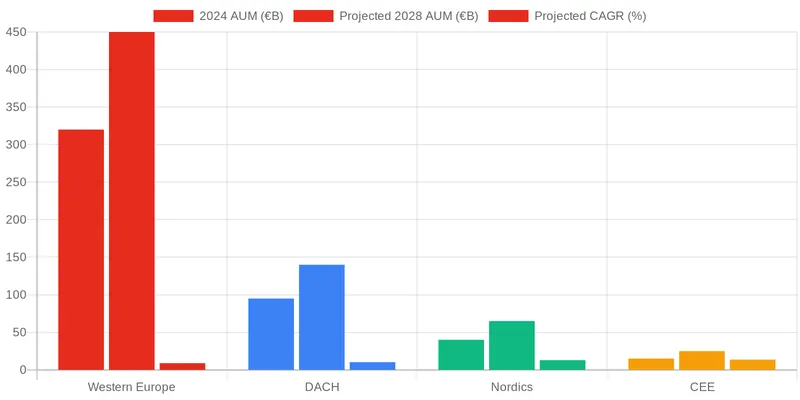
Growth Drivers Across European Regions (DACH, Nordics, CEE)
Opportunities are emerging beyond mature markets like the UK and France. The DACH region (Germany, Austria, Switzerland) has a strong industrial base of “Mittelstand” companies seeking capital for succession planning and international expansion. The Nordics have technology and sustainability-focused businesses requiring growth financing. Central and Eastern Europe (CEE) offers opportunities in consolidating industries and infrastructure development, providing portfolio diversification.
Strategic Deal Sourcing and Financing Structures
Effective deal sourcing in the competitive European market relies on established relationships, proprietary networks, and an understanding of local market dynamics. Selecting the appropriate financing structure is crucial for aligning borrower and lender interests.
Optimizing Deal Sourcing and Partnering with Private Equity Sponsors
Many mid-market deals are generated through relationships with private equity firms. These sponsor-backed buyouts provide financing opportunities for direct lenders. Partnerships with PE sponsors are essential, as they conduct extensive due diligence on their portfolio companies. A multi-channel sourcing strategy also includes networking with corporate finance advisors, accountants, and lawyers, plus direct outreach to companies. This diversified approach builds a resilient portfolio and is key to understanding private credit’s growing role in leveraged buyout financing.
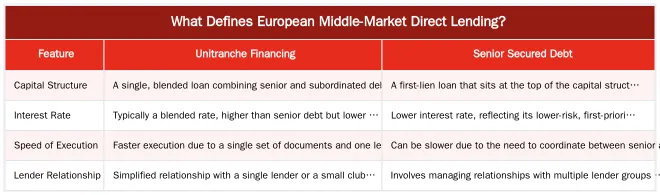
Comparing Unitranche vs. Senior Secured Debt Structures
Two common financing structures in the mid-market are senior secured debt and unitranche financing.
Expert Insights: Shaping the Future of European Direct Lending
Navigating Market Evolution: Perspectives from Industry Leaders
B2B financial conferences, such as those by DDTalks, reveal key trends for 2026 and beyond. Experts highlight the importance of sector specialization in resilient industries like healthcare, technology, and business services. Another theme is integrating ESG (Environmental, Social, and Governance) criteria into credit underwriting, which is becoming standard for institutional due diligence. Data from sources like Preqin confirms sustained growth in private credit assets under management.
The Role of Conferences in High-Value Deal-Making and Networking
In a relationship-driven market, face-to-face interaction is indispensable. Platforms like DDTalks connect GPs raising capital, LPs deploying it, and the advisors structuring deals. These events provide a forum for sharing non-public market information, identifying co-investment opportunities, and fostering trust for complex transactions. Direct engagement with decision-makers drives deal flow and collaboration in the European private credit ecosystem.
Unlock Exclusive Insights at Private Credit Days Europe
DDTalks’ events, such as Private Credit Days Europe in London, bring together influential GPs, LPs, and advisors for discussions and deal-making.
Attendees gain direct access to expert panels on trends in direct lending, asset-backed finance, and regulatory changes like AIFMD II. Build relationships that drive deal flow. Request Agenda to see the speaker lineup and secure your place.
Conclusion
The European mid-market direct lending sector offers risk-adjusted returns for investors who can navigate its complexities. Success requires disciplined credit underwriting, strategic deal sourcing, and understanding regional and regulatory shifts. Engaging with industry leaders helps investors build and manage resilient portfolios in this asset class. To learn about our conferences and connect with market participants, contact us or Request Agenda for our next event.
Frequently Asked Questions
What defines the middle market for european middle market lending?
The European middle market typically includes companies with annual revenues between €50 million and €1 billion or EBITDA from €5 million to €50 million. These firms are often underserved by traditional banks and are too small for public debt markets. This segment is the primary focus of european middle market lending, which provides them with tailored, private debt financing.
What are the main opportunities in european middle market lending?
The primary opportunities lie in generating attractive, risk-adjusted returns, often with strong downside protection through financial covenants. Lenders can finance growth, acquisitions, and buyouts for resilient companies backed by experienced private equity sponsors. This makes european middle market lending a compelling strategy for institutional investors seeking stable, income-generating assets.
What are the key risks involved with european middle market lending?
Key risks include illiquidity, as loans are not publicly traded, and the potential for increased default risk during economic downturns. Portfolio companies may also face operational challenges that require active management from the lender. Thorough due diligence is essential to mitigate these risks in european middle market lending.
Why is local deal sourcing so important for mid-market debt in Europe?
The European mid-market is highly fragmented and relationship-driven, with distinct business cultures in each country. Effective deal sourcing requires a strong, local network of private equity firms, M&A advisors, and industry contacts. This on-the-ground presence is critical for accessing the best, privately negotiated investment opportunities.
How do regulations like AIFMD II affect direct lending to Europe’s middle market?
Regulations such as the Alternative Investment Fund Managers Directive (AIFMD II) directly impact fund structuring, marketing, and reporting requirements for private credit managers. These rules aim to increase transparency and investor protection across the EU. Navigating this complex regulatory landscape is a key operational consideration for funds active in the space.
Where can I learn more about current strategies in this sector?
To gain expert insights from leading GPs and LPs on the latest trends, risks, and opportunities, you can join our specialized industry events. For a detailed overview of panel discussions and networking opportunities at our next conference, you can request the agenda today.



0 Comments