

Pitch Conference Panel Topic: Crafting Proposals for Elite Events
To effectively pitch conference panel topic ideas, understanding the specific needs of elite B2B financial conference organizers is crucial. This guide details how to develop compelling proposals that resonate with event programming teams. It covers researching conference objectives, identifying critical content gaps in areas like European private credit or distressed debt, and structuring a session abstract that highlights timely market insights. Learn to craft a proposal that offers actionable intelligence on topics such as NPL workouts or regulatory shifts, ensuring your submission stands out.
DDTalks specializes in organizing premium B2B financial conferences across Europe, focusing on private credit, NPL, and distressed debt markets. Our events facilitate high-value deal-making and industry networking, attracting top-tier institutions and thought leaders.
To explore your options, contact us to schedule your consultation. You can also reach us via: Request Agenda
What Makes a Conference Panel Topic Compelling?
A compelling conference panel topic delivers timely, actionable intelligence that addresses a significant challenge or opportunity for the audience. It provides unique insights, provokes debate, and offers a forward-looking perspective attendees cannot find elsewhere. The topic’s direct relevance to the audience’s professional objectives is critical.
For high-stakes B2B financial events focused on European private credit or distressed debt, a topic must be rooted in current market realities. It should promise tangible value, such as a new strategy for NPL workouts, an analysis of emerging asset-backed finance structures, or a clear view of regulatory shifts. When you pitch conference panel topic ideas, demonstrate this immediate, practical value to the event’s content curation team.
An engaging topic has potential for discussion. It should be narrow enough for depth but broad enough for diverse viewpoints from a panel of experts. A topic summarizing known facts will fail; one exploring the “why,” “how,” and “what’s next” will capture the attention of organizers and delegates.
How to Research & Align Your Pitch with Conference Goals
A successful conference proposal is tailored to the specific event. Before writing, research the conference’s objectives, audience, and existing content to align your topic.
Decoding the Conference’s Core Focus & Audience
Analyze the conference’s website and marketing materials to identify core themes, such as direct lending, securitisation, or NPL portfolio management. Identify the target audience: is it for Limited Partners (LPs), General Partners (GPs), investment bankers, or workout professionals? A topic on fund structuring is valuable for GPs but less relevant for NPL servicers.
Review agendas and speaker lists from previous years. This reveals topics that resonated and the level of expertise expected. Note the seniority of past speakers—institutions like Blackstone, Goldman Sachs, and Ares Management often participate in premium forums. Your proposal must match this caliber.
Identifying Gaps in the Current Event Agenda
Look for what’s missing in the conference’s focus. A strong pitch addresses a new development or a nuanced angle on an existing theme. Analyze how current industry trends intersect with the conference’s core subject. For example, if an event focuses on European private credit, a timely topic could be the impact of new regulations like AIFMD II on fund marketing and operations.
Look for emerging challenges or opportunities not yet on the agenda. This could be a specific geographic focus, like the distressed debt landscape in the Iberian Peninsula, or a new financial instrument. Proposing a topic that fills a content gap shows organizers you are pushing the industry dialogue forward.
Crafting a Standout Panel Proposal: Structure & Content
A well-structured proposal shows event programmers the value and relevance of your topic. Clarity, conciseness, and a focus on attendee benefits are essential.
Developing a Clear, Engaging Session Abstract
The session abstract is your elevator pitch. In 150-200 words, it must capture your panel’s essence. Start with a hook identifying a critical industry problem or question. Outline the key areas the panel will explore and state the audience takeaways. Use precise language and avoid jargon. The abstract must answer: “Why is this topic important right now, and what will an attendee learn?”
Selecting Diverse & Authoritative Speakers
A panel is only as strong as its speakers. Propose a balanced, diverse group of experts for different perspectives. For a financial conference, this could include a GP, an LP, a legal advisor, and a rating agency representative. This variety ensures a rich discussion, not a one-sided presentation. Name specific individuals or describe ideal profiles and affiliations. This shows the committee your vision for the panel’s composition and authority.
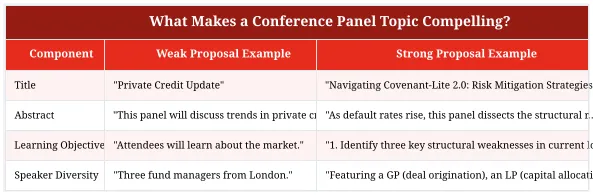
View data as table
| Component | Weak Proposal Example | Strong Proposal Example |
|---|---|---|
| Title | “Private Credit Update” | “Navigating Covenant-Lite 2.0: Risk Mitigation Strategies for Direct Lenders in a Volatile Market” |
| Abstract | “This panel will discuss trends in private credit.” | “As default rates rise, this panel dissects the structural risks in today’s covenant-lite loans. Experts will debate early warning indicators, workout playbooks, and strategies for LPs to enhance due diligence.” |
| Learning Objectives | “Attendees will learn about the market.” | “1. Identify three key structural weaknesses in current loan documents. 2. Compare workout strategies for middle-market vs. large-cap deals. 3. Assess the impact of rising interest rates on portfolio performance.” |
| Speaker Diversity | “Three fund managers from London.” | “Featuring a GP (deal origination), an LP (capital allocation), a restructuring lawyer (workout execution), and an economist (macro view).” |
What Do Elite Financial Conference Organizers Look For?
Organizers of premium B2B financial conferences, like those hosted by DDTalks, have distinct priorities. Their programming facilitates networking and deal-making. A pitch must align with these commercial and intellectual objectives. Understanding how to leverage speaking opportunities at European debt summits begins with understanding the organizer’s mindset.
Relevance to Current Market Flows & Regulatory Updates
Timeliness is paramount. A topic groundbreaking a year ago may be obsolete today. Organizers seek content reflecting current market reality, such as active NPL portfolio sales in Southern Europe, the revival of private securitisation structures, or the implications of regulatory changes. Referencing current market dynamics signals your panel will provide actionable intelligence, not recycled commentary.
For example, a proposal analyzing the impact of the AIFMD II directive on fundraising in the DACH region is more compelling than a general overview of European regulations. This specificity demonstrates expertise and understanding of delegate challenges.
Facilitating High-Value Deal-Making & Networking
Elite conferences are catalysts for business. Content is curated to spark conversations that continue during networking breaks. Organizers want topics that lead to deal origination discussions. A panel debating the relative value of different asset classes in private credit, for instance, serves GPs seeking capital and LPs looking to deploy it.
Your proposal should show how the discussion will help attendees make better investment decisions. This focus on practical application and commercial outcomes is a key factor for acceptance at top-tier events.
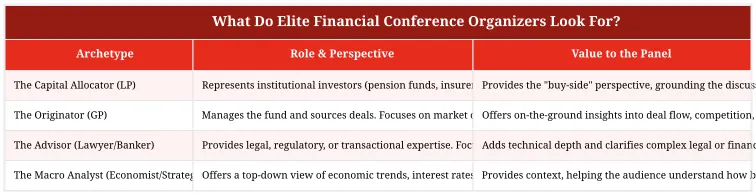
View data as table
| Archetype | Role & Perspective | Value to the Panel |
|---|---|---|
| The Capital Allocator (LP) | Represents institutional investors (pension funds, insurers). Focuses on due diligence, risk management, and returns. | Provides the “buy-side” perspective, grounding the discussion in investor demand and concerns. |
| The Originator (GP) | Manages the fund and sources deals. Focuses on market opportunities, structuring, and execution. | Offers on-the-ground insights into deal flow, competition, and operational challenges. |
| The Advisor (Lawyer/Banker) | Provides legal, regulatory, or transactional expertise. Focuses on structure, compliance, and M&A. | Adds technical depth and clarifies complex legal or financial structures. |
| The Macro Analyst (Economist/Strategist) | Offers a top-down view of economic trends, interest rates, and geopolitical risks. | Provides context, helping the audience understand how broader forces impact the specific market segment. |
Maximizing Your Impact: Beyond the Pitch
A strategic approach, from follow-up to post-event engagement, enhances your professional standing and creates opportunities. Securing a speaking slot builds long-term thought leadership.
Strategic Follow-Up & Relationship Building
After submitting your proposal, a brief, professional follow-up is appropriate, especially with a prior connection to the organizers. An email confirming receipt and reiterating your enthusiasm keeps your submission top-of-mind. Avoid being persistent. The goal is to build a relationship, not pressure the committee.
Regardless of acceptance, view every interaction as a networking opportunity. If your pitch is declined, ask for brief feedback. This provides insights for your next submission and shows commitment. Building rapport can position you for future `call for papers`, as conferences plan agendas months in advance.
Leveraging Thought Leadership for Business Growth
Speaking at a prestigious European financial summit establishes credibility and authority, positioning you and your firm as leaders. Promote your speaking engagement on networks like LinkedIn. After the event, share key insights or a summary in a blog post or article. This extends the content’s life and reinforces your expertise.
Networking opportunities at these events are invaluable. As a speaker, connect with other panelists, attendees, and potential clients. Stage visibility can translate into new business opportunities and strategic partnerships. You can learn more about how to connect with industry leaders and policymakers at dedicated forums.
Ready to Share Your Expertise? Partner with DDTalks
If you have unique insights into the European private credit, NPL, or structured finance markets, connect with our event programming team. DDTalks curates agendas with industry experts on pressing topics. We seek authoritative voices to help delegates navigate complex market dynamics.
Participating in a DDTalks event places you at the center of deal-making and networking. To pitch topic ideas that shape the industry, explore our in-depth panels on NPL and distressed debt conference agenda to see the caliber of discussions we foster. Request Agenda or contact us to learn more about speaking opportunities.
Conclusion
Successfully pitching a panel topic to an elite financial conference hinges on delivering demonstrable value to a sophisticated audience. Organizers value an idea’s immediate market relevance and its potential to spark conversations that lead to business outcomes. Move from a general idea to a researched, specific proposal that anticipates delegate needs. Aligning your expertise with the event’s goals transforms an idea into a platform for thought leadership.
To explore opportunities at our upcoming European forums, contact us or Request Agenda.
Frequently Asked Questions
How can my panel topic stand out for a specialized event like a European NPL summit?
To stand out, your topic must address a forward-looking, specific challenge, not just summarize current events. For instance, instead of a general NPL overview, propose “Workout Strategies for Spanish CRE Assets Under AIFMD II Regulations.” This demonstrates deep market awareness and aligns with the data-driven focus of organizers catering to workout professionals and rating agencies.
What is the most common reason a well-researched panel topic proposal gets rejected?
The most frequent reason for rejection is a lack of clear, tangible takeaways for the audience. A proposal might have a great title but fail to list 3-5 specific learning objectives that promise actionable intelligence. Organizers for elite B2B events need to see precisely how attendees, from GPs to LPs, will benefit from the 45-minute session.
Should I confirm availability with potential co-panelists before suggesting them in my pitch?
While not mandatory, it significantly strengthens your proposal if you can state that you’ve had preliminary conversations with suggested speakers from other top-tier firms. Mentioning that a director from a firm like Ares Management or Bain Capital has expressed interest adds immense credibility and shows the organizer you can help assemble a high-caliber lineup.
How far in advance should I pitch conference panel topic ideas for major annual financial forums?
For major annual events like those hosted in London or Madrid, you should submit your proposal 6 to 9 months in advance. The content curation process for these high-stakes conferences begins very early to secure top speakers from institutions like Blackstone or Goldman Sachs. Submitting later than this window drastically reduces your chances as the agenda will likely be near-finalized.
How important is it to include specific data points in my initial panel pitch?
Including a compelling data point or a brief, anonymized case study is highly effective for financial conferences. It immediately signals that your proposed discussion will be substantive and evidence-based, not purely theoretical. Referencing a recent shift in European ABS issuance volumes or a specific NPL portfolio transaction trend will capture the attention of the event’s research committee.
Is it better to propose a standard panel or an alternative format like a fireside chat?
Proposing an alternative format can strategically differentiate your idea, especially if the topic is complex or involves a single, high-profile figure. A fireside chat is ideal for a deep dive with an industry leader, while a “deal-making deep dive” workshop could be perfect for a topic on complex capital restructuring. Justify why your chosen format is superior for delivering insights to the target audience of institutional investors and advisors.

0 Comments