

Corporate Debt Restructuring Strategies: Navigating High-rate Environments
Corporate debt restructuring strategies are essential for distressed companies navigating a high-rate environment, shifting focus from traditional refinancing to modifying existing obligations. This article outlines key approaches like covenant relief, maturity extensions, and leveraging private credit solutions to preserve enterprise value. Effective liability management and turnaround management are critical for stabilizing capital structures and avoiding insolvency. Understanding these corporate debt restructuring strategies empowers businesses to adapt and secure their financial future amidst challenging market conditions.
DD Talks provides expert insights into European private credit, NPL, and distressed debt markets. Our conferences facilitate high-value deal-making and networking among institutional investors and financial professionals, offering practical strategies for complex financial challenges.
To explore your options, contact us to schedule your consultation. You can also reach us via: Request Agenda
In a high-rate environment where traditional refinancing is constrained, corporate debt restructuring strategies are critical for businesses facing financial pressure. The focus shifts from seeking cheaper debt to modifying existing obligations, requiring liability management and turnaround planning. Methods for distressed companies range from negotiating covenant relief and maturity extensions to leveraging private credit solutions to preserve enterprise value in the European financial landscape.
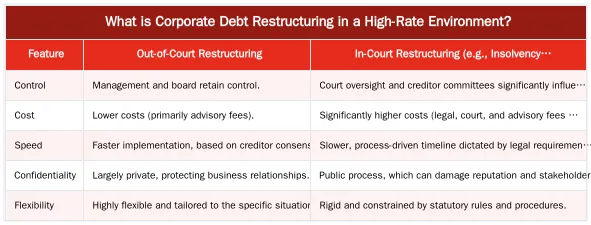
What is Corporate Debt Restructuring in a High-Rate Environment?
Corporate debt restructuring reorganizes a company’s outstanding debt obligations to improve its financial health and avert insolvency. In a high-rate environment, this process shifts from refinancing debt at a lower cost to modifying the terms of existing debt to create a sustainable capital structure.
Primary goals are to improve liquidity, reduce the cash burden of debt service, and align financial obligations with the company’s operational performance. Key adjustments include:
- Maturity Extensions: Pushing back principal repayment dates to provide time to stabilize operations.
- Interest Rate Modifications: Adjusting interest rates, potentially including a period of payment-in-kind (PIK) interest, where interest is added to the principal balance instead of being paid in cash.
- Covenant Amendments: Negotiating changes to financial covenants (e.g., debt-to-EBITDA ratios) that the company is at risk of breaching.
- Principal Reduction: In more severe distress scenarios, negotiating a reduction of the total principal amount owed, often in exchange for equity or other considerations.
Why Traditional Refinancing is Less Viable Today
Elevated central bank rates increase corporate borrowing costs. For a financially strained company, refinancing means locking in higher interest payments, which exacerbates liquidity problems. Lenders also become more risk-averse, tightening credit standards and making it difficult for distressed companies to access new capital from traditional sources like syndicated loans or public bond markets. This forces a pivot towards negotiating with existing creditors rather than replacing them.
Corporate Debt Restructuring Strategies for Distressed Companies
Companies use various liability management tools to stabilize their balance sheets. The choice of strategy depends on the severity of distress, creditor group composition, and the business’s long-term viability.
Negotiating Covenant Relief and Maturity Extensions
Covenant relief is often the first line of defense for a company approaching financial distress. Financial covenants are contractual clauses requiring a borrower to maintain certain financial metrics. A breach can trigger a default, allowing lenders to demand immediate repayment. Proactively requesting a waiver or amendment to these covenants helps a company avoid a technical default and gain time.
Extending debt maturities, known as “amend and extend,” is another common approach. It involves negotiating with lenders to push back the principal due date. In exchange, lenders may require higher interest rates, fees, or improved collateral. This provides operational breathing room to execute a turnaround plan without the pressure of a large repayment. These negotiations are central to the early workout playbooks used by NPL servicers and distressed debt professionals.
Exploring Debt-for-Equity Swaps and Asset Sales
Deeper distress requires more significant balance sheet adjustments. A debt-for-equity swap involves converting a portion of a company’s debt into equity, which deleverages the company by reducing its interest expense and principal obligations. Creditors become shareholders, giving them a stake in the company’s success. This aligns former lenders’ interests with the company’s recovery but dilutes existing equity.
Strategic asset sales are another tool. Divesting non-core or underperforming assets generates cash to pay down debt. This reduces leverage and streamlines operations, allowing management to focus on the core business. Successful asset sales require careful valuation and execution to maximize proceeds without impairing long-term operational capabilities.
Leveraging Private Credit & Out-of-Court Solutions
When traditional lenders pull back, private credit funds become a critical source of capital for companies undergoing restructuring. These funds offer flexible financing solutions tailored to a company’s needs, often moving more quickly than traditional banks. This is particularly relevant in the European market, where the private credit landscape is maturing.
The Rise of Private Credit in Distressed Scenarios
Private credit providers specialize in complex situations and underwrite risks traditional lenders may avoid. They can provide rescue financing, capital for turnaround plans, or funds to take out existing lenders at a discount. Because these funds often hold the entire debt instrument, negotiations are simpler than with a large bank syndicate. This direct relationship allows for more flexible solutions, making corporate restructuring through private credit solutions a vital option for mid-market and large-cap companies.
Advantages of Out-of-Court Restructuring vs. Insolvency
Companies and creditors prefer to negotiate restructuring plans outside of a formal court process. This out-of-court approach offers advantages over formal insolvency proceedings like Chapter 11 in the U.S. or similar European frameworks. The primary benefits are speed, cost savings, and confidentiality, which help preserve enterprise value by maintaining customer and supplier confidence.
Navigating Complexities in European Debt Markets
Executing a corporate turnaround in Europe requires understanding its fragmented legal and financial landscape. Unlike the United States’ unified Chapter 11 bankruptcy code, Europe has numerous jurisdictions with their own insolvency laws and restructuring frameworks. This complexity requires specialized expertise, such as the intelligence shared among leaders at DD Talks forums in London and Madrid.
The Role of Specialized Advisors and Legal Frameworks
Navigating this environment requires experienced financial and legal advisors with skills in valuation, negotiation, and liquidity management. Legal counsel with cross-border experience is critical for understanding instruments like the UK’s Restructuring Plan or the preventative restructuring frameworks introduced by the EU Restructuring Directive. These tools provide mechanisms for comprehensive restructurings, but their effective use demands legal and financial acumen.
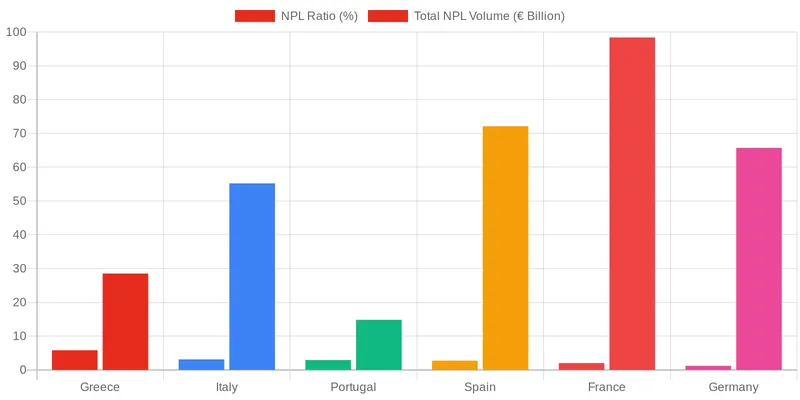
The table below illustrates the varying levels of non-performing loans (NPLs) across key European economies, highlighting the regions where distressed debt activity and restructuring opportunities are most prevalent.
Understanding Distressed Investments and Opportunities
A corporate restructuring is a challenge for the company and an opportunity for specialized investors. Distressed debt funds, private equity firms, and other institutional investors seek situations where they can provide capital and operational expertise for a turnaround. These investors may purchase debt at a discount on the secondary market to influence the restructuring process or convert their debt into a controlling equity stake. Understanding the interplay between distressed investments and corporate restructuring opportunities is important for companies seeking capital and investors looking for value.
Turnaround Management: Outcomes and Future Outlook
A well-executed debt restructuring can lead to long-term success, not just survival. The goal is to emerge with a sustainable capital structure, a viable business plan, and restored confidence among stakeholders (employees, customers, suppliers, and investors). Turnaround management is critical to preserving economic value and jobs.
A successful financial reorganization allows a company to shift from crisis management to strategic growth. With a healthier balance sheet, the business can reinvest in core operations, pursue new market opportunities, and regain a competitive footing. The process often forces necessary operational improvements, leading to a more efficient and resilient enterprise.
Measuring Success: Key Metrics and Long-Term Stability
Restructuring success is measured by financial and operational metrics. Key financial indicators include improved credit ratings, reduced leverage ratios (e.g., Debt/EBITDA), and increased free cash flow. Operational success includes stabilized or growing revenues, improved profit margins, and achieving strategic milestones from the turnaround plan.
Looking ahead to 2026 and beyond, the landscape for distressed companies will be shaped by macroeconomic factors like interest rate policies and geopolitical stability. Companies that proactively manage liabilities and maintain transparent dialogue with creditors will be best positioned to navigate future challenges. Access to diverse capital sources, including the growing private credit market, will remain a key determinant of success in distressed investments and corporate restructuring scenarios.
Connect with European Distressed Debt Leaders at Our Next Event
Navigating liability management and turnaround situations requires practical connections and insights. DD Talks provides a platform for senior professionals for deal-making and strategic discussions on the European private credit, NPL, and distressed debt markets.
Our conferences in London, Madrid, and other European financial hubs bring together institutional investors, fund managers, and expert advisors. Gain access to industry decision-makers and find solutions for your challenges. To learn more about our upcoming forums, Request Agenda.
Conclusion
In a high-rate environment, corporate debt restructuring is a core competency for financial resilience. By using solutions like covenant amendments, maturity extensions, and partnerships with private credit providers, distressed companies can find a path to stability and growth. Proactive engagement with creditors and expert advisors is paramount to preserving enterprise value. To deepen your expertise and connect with leaders navigating these markets, explore our upcoming events. For more information, contact us or Request Agenda for our next conference.
Frequently Asked Questions
Why are alternative corporate debt restructuring strategies essential in a high-rate environment?
In a high-interest-rate environment, traditional refinancing is often too expensive or unavailable for distressed companies. This forces them to pursue alternative corporate debt restructuring strategies that focus on modifying existing obligations, such as extending maturities or amending covenants, to preserve liquidity and avoid insolvency.
What is a common “amend and extend” transaction?
An “amend and extend” is a consensual, out-of-court negotiation with existing lenders to push back a loan’s maturity date. In exchange for this extension, lenders typically receive improved terms, such as higher interest rates, additional fees, or more restrictive covenants. This approach is a cornerstone of many turnaround plans.
How do private credit funds influence modern corporate debt restructuring strategies?
Private credit funds have become pivotal capital providers, offering bespoke and flexible financing when traditional banks cannot. They can provide rescue loans, structured equity, or direct lending to facilitate complex turnarounds. Their involvement is a key component of many successful corporate debt restructuring strategies in the current European market.
Is an out-of-court workout better than a formal insolvency process?
Out-of-court workouts are generally preferred as they are faster, more confidential, and less costly than formal insolvency proceedings. They allow for greater flexibility and help preserve business relationships and enterprise value. However, a formal process may be unavoidable if a consensual agreement among all creditor classes cannot be achieved.
What are the primary goals of corporate debt restructuring strategies for a distressed company?
The primary goals are to restore financial stability, ensure operational continuity, and maximize value for all stakeholders. Effective corporate debt restructuring strategies aim to create a sustainable capital structure by right-sizing debt levels, improving liquidity, and aligning payment obligations with the company’s projected cash flows.
Where can I connect with experts on European distressed debt and NPLs?
You can engage directly with leading GPs, LPs, and workout professionals at our specialized industry forums in London and Madrid. These events are designed for high-value networking and deep dives into the European distressed debt and private credit markets. To see the lineup of expert speakers and topics, you can request the latest event agenda.




0 Comments