

Pre-conference Attendee Lists: Strategic Networking for Deal Sourcing
Pre-conference attendee lists are essential tools for maximizing B2B event networking. Leveraging these lists enables strategic meeting planning, transforming passive attendance into targeted lead generation and deal sourcing opportunities. Professionals in private credit and structured finance can proactively identify high-value contacts, such as LPs, GPs, and advisors, before an event. This allows for tailored outreach and pre-scheduled meetings, significantly enhancing conference ROI. Effective use of pre-conference attendee lists ensures focused GP/LP outreach and optimized engagement at critical private credit events.
DDTalks specializes in organizing premium B2B financial conferences across Europe, facilitating high-value deal-making in private credit, NPL, and structured finance. Our events connect top-tier GPs, LPs, and industry leaders, providing focused networking opportunities for institutional investment professionals.
To explore your options, contact us to schedule your consultation. You can also reach us via: Request Agenda
What Are Pre-Conference Attendee Lists and Why Are They Crucial?
Pre-conference attendee lists are documents from event organizers with the names, job titles, and company affiliations of registered delegates. For professionals in private credit and structured finance, this information enables strategic meeting planning, transforming a passive event experience into a targeted campaign for lead generation and deal sourcing.
After receiving a delegate roster, begin segmentation. Categorize each contact by your objectives—such as fundraising, deal origination, or partnership development—before initiating outreach. This classification dictates the efficiency and success of all subsequent networking efforts.
Defining Your Strategic Advantage in B2B Networking
In institutional investment, where a single connection can lead to a significant mandate or deal, arriving at a conference without a plan is a missed opportunity. Access to pre-conference attendee lists provides an advantage. It allows you to engineer high-value interactions instead of relying on chance encounters. By identifying and researching key LPs, GPs, and advisors in advance, you can prepare tailored talking points, understand their current investment focus, and schedule meetings that align with mutual interests, maximizing your conference ROI before the event begins.
How to Strategically Leverage Attendee Lists for B2B Deal Sourcing
Using a participant list effectively requires more than identifying names. It requires a methodical approach to segmentation and prioritization, especially for objectives like GP/LP outreach and sourcing opportunities at private credit events. The goal is to create a focused action plan that targets the most relevant individuals.
Segmenting for Success: Identifying High-Value Prospects
Segment the list into categories. For institutional investors, segment by firm type (pension fund, insurer, family office), role (CIO, Portfolio Manager, Analyst), and investment mandate (e.g., European direct lending, distressed debt, asset-backed finance). A GP seeking capital might prioritize LPs by their assets under management (AUM) and previous activity in similar funds. This approach ensures your outreach is concentrated for maximum impact.

View data as table
| Tier | Description | Key Identifiers | Primary Goal |
|---|---|---|---|
| Tier 1 (Must-Meet) | High-priority targets directly aligned with core objectives. | LPs with matching investment mandates, GPs with active funds, key decision-makers (CIO, Partner). | Secure a 15-20 minute scheduled meeting. |
| Tier 2 (High-Potential) | Individuals or firms with strong potential for future collaboration. | Senior analysts, VPs at relevant firms, service providers with complementary offerings. | Initiate a conversation, exchange contact info for follow-up. |
| Tier 3 (Informational) | Contacts for market intelligence and general networking. | Junior professionals, academics, industry journalists. | Brief introduction, understand their perspective. |
Research & Prioritization: Building Your ‘Must-Meet’ List
After segmenting, research your prospects. Use professional networks like LinkedIn, company websites, and recent press releases to understand each Tier 1 prospect’s current activities. Has their firm recently closed a fund? Have they spoken publicly on a topic relevant to your strategy? This intelligence enables an informed, relevant conversation. The output is a prioritized shortlist of 10-15 individuals for dedicated meetings.
Mastering Outreach: Effective Strategies for Engaging High-Value Contacts
With a prioritized list, the focus shifts to execution. A networking strategy requires personalized communication and precise timing to secure meetings with senior financial professionals. The quality of your outreach directly influences your success in scheduling meetings.
Crafting Compelling Pre-Conference Outreach Emails
Your initial email must be concise, professional, and value-driven. Avoid generic templates; reference a specific, relevant detail from your research. For example, mention their participation in a recent panel, a shared interest in a market trend like AIFMD II’s impact, or a potential synergy between your firms. The message should state the purpose of the meeting and propose a benefit for them. End with a clear call to action, such as suggesting a 15-minute coffee meeting at the venue.
Optimizing Your Meeting Scheduling Timeline
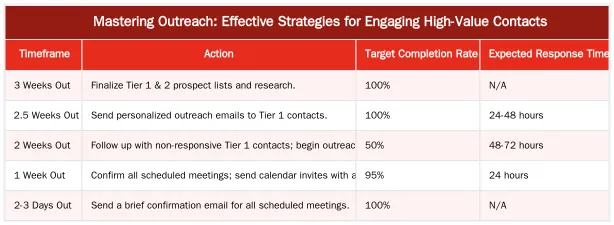
Timing is critical. Contacting too early risks your message being forgotten; too late, and calendars will be full. The optimal outreach window is 2-3 weeks before the event. This allows time for a response, scheduling, and a follow-up. Sending calendar invitations immediately upon confirmation solidifies the commitment. This timeline respects the attendee’s schedule and demonstrates professionalism.
View data as table
| Timeframe | Action | Target Completion Rate | Expected Response Time |
|---|---|---|---|
| 3 Weeks Out | Finalize Tier 1 & 2 prospect lists and research. | 100% | N/A |
| 2.5 Weeks Out | Send personalized outreach emails to Tier 1 contacts. | 100% | 24-48 hours |
| 2 Weeks Out | Follow up with non-responsive Tier 1 contacts; begin outreach to Tier 2. | 50% | 48-72 hours |
| 1 Week Out | Confirm all scheduled meetings; send calendar invites with agenda points. | 95% | 24 hours |
| 2-3 Days Out | Send a brief confirmation email for all scheduled meetings. | 100% | N/A |
Maximizing ROI: DDTalks’ Approach to High-Value Private Credit Networking
The value of a participant roster is amplified by event quality. DDTalks conferences are structured to foster interactions among senior decision-makers in the European private credit, NPL, and structured finance markets. By gathering leaders from firms like Blackstone, Goldman Sachs, and PIMCO, as seen in our past events, we create an environment where pre-planned meetings can lead to deal-making conversations.
Facilitating Strategic Partnerships at Premium Financial Conferences
Our events have dedicated networking breaks, private meeting rooms, and an agenda that attracts a balanced ratio of GPs, LPs, and advisors. This ecosystem ensures that individuals on an attendee list are actively seeking to engage in high-level discussions. This environment supports your scheduled meetings, directly contributing to a higher conference ROI. For those looking to enhance their presence, understanding how to achieve maximum corporate visibility among top-tier GPs and LPs is a key component of a successful event strategy.
Ethical Considerations and Data Privacy in Attendee Outreach
In the European market, all outreach must adhere to data protection regulations, primarily the General Data Protection Regulation (GDPR). When using a delegate list, ensure your communication is professional, relevant, and respects individual privacy. This means avoiding mass, impersonal emails and ensuring your outreach has a legitimate interest basis. Adhering to these principles, as outlined by regulators like the Information Commissioner’s Office (ICO), ensures compliance, builds trust, and reinforces your firm’s professional reputation.
Streamlining Your Post-Conference Follow-Up and CRM Integration
The work continues after the conference. A systematic post-event process is essential for converting new connections into business opportunities. Integrating data from your networking efforts into your Customer Relationship Management (CRM) system is the critical link between meeting people and building a pipeline for lead generation and sales prospecting.
CRM Integration for Institutional Investment Sales Prospecting
Within 48 hours of the event, update your CRM. For each new contact, create or update their profile with detailed notes from your conversation. Key data points to capture for institutional contacts include their investment interests, fund size criteria, decision-making timelines, and any personal rapport-building details. Tagging contacts with the event name (e.g., “Private Credit Days Europe 2026”) allows for tracking of lead sources and ROI analysis. Set a specific follow-up task and date for each promising contact to ensure no opportunity is overlooked.
Converting Connections into Concrete Deal Opportunities
Your follow-up communication should be as personalized as your initial outreach. Reference your conversation and any agreed-upon next steps. This could involve sending a relevant whitepaper, sharing a deck, or scheduling a call to discuss a specific deal or mandate. The goal is to maintain momentum and guide the relationship toward a business discussion. Tracking these interactions in your CRM helps nurture new relationships and manage the long sales cycles in institutional finance, turning conference handshakes into successful deal sourcing. This approach is key to building strategic partnerships.
Secure Your Spot: Unlock Networking at Upcoming DDTalks Events
Applying these strategies requires attending the right events. DDTalks conferences are gatherings for Europe’s professionals in private credit, distressed debt, and structured finance. Our events provide the platform to connect with decision-makers who can advance your firm’s objectives.
Join Europe’s Elite in Private Credit and Distressed Debt
Engage with an exclusive audience of institutional investors, fund managers, and top-tier advisors. By securing your place, you gain access to the delegate lists and networking environment necessary to execute a strategic meeting plan. Explore our upcoming conferences and book your ticket to be part of Europe’s important financial conversations.
Conclusion
The value derived from pre-conference attendee lists is a direct result of the strategic discipline applied to them. Treat the list not as a directory, but as a strategic blueprint for achieving business goals. The recommended next step for B2B financial professionals is to integrate this pre-planning process into their standard operating procedure for all event participation. To discover the networking opportunities at our next forum, Request Agenda or contact us today.
Frequently Asked Questions
How far in advance should I request meetings with top-tier LPs from a conference delegate list?
Begin targeted outreach 3-4 weeks prior to the event. Key decision-makers, especially those traveling internationally to cities like London or Madrid for DD Talks events, often finalize their schedules a full month in advance, leaving very few slots for last-minute requests.
What is the most common mistake when segmenting a pre-conference attendee list for private credit?
The most common error is segmenting only by job title instead of by strategic fit and recent activity. A more effective approach involves cross-referencing the pre-conference attendee lists with platforms like Preqin to identify LPs with active mandates in your specific strategy, such as European direct lending or asset-backed finance, ensuring your outreach is highly relevant.
How can I ensure my use of a delegate list complies with GDPR?
To comply with GDPR, your outreach must have a clear “legitimate interest” basis directly related to the professional context of the conference. Always include a simple way for the recipient to opt-out and avoid adding contacts to broad marketing lists without explicit consent. The initial contact should be a personalized, one-to-one message about a potential meeting at the event.
What is a realistic target for securing meetings from a list of 200 attendees?
For a highly targeted list, a successful campaign can yield a 10-15% meeting conversion rate, resulting in 20-30 scheduled meetings. However, success hinges on personalization, as generic outreach often results in conversion rates below 2%. The primary goal should be quality over quantity, focusing on securing 5-7 high-value meetings with your top-tier targets.
Should my outreach email mention a specific panel or speaker from the conference agenda?
Yes, referencing a specific agenda item is a highly effective personalization tactic. Mentioning your interest in discussing the “AIFMD II Impact on Fund Structuring” panel, for example, shows you have done your research and provides a natural conversation starter. This approach signals you are attending for substance, not just generic networking.
How do I prioritize follow-up after the conference with contacts from the initial list?
Prioritize follow-up within 48 hours based on the tiering system you created before the event. Start with your “Tier 1” contacts with whom you met, referencing a specific point from your conversation. For high-value contacts you couldn’t meet, send a brief “sorry we missed each other” note and suggest a virtual call, showing persistent but respectful interest.


0 Comments