

Negotiating With Creditor Committees: Mastering European Restructuring Strategies
Negotiating with creditor committees is crucial for successful outcomes in complex European restructurings. This article provides essential strategies for institutional investors and distressed debt professionals, covering legal frameworks and intercreditor dynamics. Readers will learn to navigate ad hoc and steering committees, optimize information sharing, and leverage expert advisors to build consensus. Effective negotiation with creditor committees requires understanding diverse stakeholder interests and crafting viable restructuring plans, ultimately preserving value across cross-border insolvency scenarios.
DD Talks specializes in premium B2B financial conferences, facilitating high-value deal-making and industry networking across European private credit, NPL, and distressed debt markets. Our platforms provide deep insights into complex financial restructurings, connecting top-tier GPs, LPs, and advisors.
To explore your options, contact us to schedule your consultation. You can also reach us via: Request Agenda
Negotiating with creditor committees is fundamental to successful outcomes in complex European restructurings. The process involves intricate legal frameworks, diverse stakeholder interests, and high-stakes financial decisions. This guide covers strategies, challenges, and legal considerations for institutional investors, distressed debt professionals, and their advisors, exploring committee roles, intercreditor dynamics, and the function of expert advisors.
What is a Creditor Committee and Why Does it Matter in European Restructurings?
A creditor committee represents the collective interests of a creditor group in a corporate restructuring or insolvency proceeding. Its function is to streamline communication and negotiation by creating a unified voice for a creditor class, such as senior lenders, bondholders, or unsecured trade creditors. This structure is critical in large-scale European restructurings involving numerous creditors across multiple jurisdictions, which makes one-on-one negotiations impractical.
By centralizing discussions, committees facilitate an efficient process for evaluating the company’s financial situation, assessing a restructuring plan, and negotiating terms. They provide a forum for creditors to share information, coordinate strategies, and exert collective leverage, shaping the final restructuring outcome.
Types of Creditor Committees: Ad Hoc vs. Steering
Two primary types of committees emerge in European restructurings. An ad hoc committee is formed informally by creditors holding a significant portion of a debt class to protect their economic interests, often engaging their own advisors. A steering committee is a more formal body, sometimes appointed to represent an entire creditor class. It leads negotiations with the debtor and other stakeholders to build consensus around a solution.
Key Strategies for Effective Negotiation with Creditor Committees
Effective engagement with creditor groups requires preparation, transparency, and understanding stakeholder motivations. The initial phase involves analyzing the creditor landscape to identify key committee members, their advisors, and their economic exposures and objectives. A credible business plan is the cornerstone of negotiation, providing a rationale for the proposed restructuring and a path to recovery.
Open communication is essential. Regular updates, responsiveness, and addressing concerns build trust and prevent misinformation. Negotiation aligns disparate interests toward value preservation, requiring a balanced proposal that acknowledges creditor priorities while respecting the company’s operational and financial constraints.
Strategic Information Sharing and Building Consensus
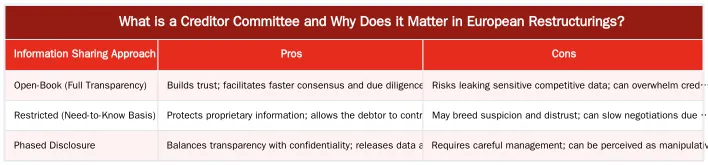
Information flow is a critical lever in negotiations. A defined information sharing protocol fosters a collaborative environment, while poor management creates distrust and stalls progress. Provide timely, accurate, and sufficient information for informed decisions without compromising sensitive corporate data. Building consensus is an iterative process of proposals and counter-proposals, requiring patience and flexibility from the debtor’s team and advisors.
European Legal Frameworks and Cross-Border Challenges
European restructurings operate under a diverse patchwork of national legal regimes. The EU’s Preventive Restructuring Directive (Directive (EU) 2019/1023) aims to harmonize these frameworks, introducing concepts like stays of enforcement and cross-class cram-down mechanisms. Significant local variations remain, requiring advisors to have expertise in multiple jurisdictions.
Cross-border insolvency adds complexity. When a company has assets and creditors in several countries, legal planning is required to ensure a restructuring plan approved in one jurisdiction is enforceable in others. Navigating the interplay between European debt and equity markets is a focus at DD Talks forums. Understanding these legal nuances is essential for effective corporate debt restructuring strategies.
Understanding Schemes of Arrangement and Restructuring Plans
The UK scheme of arrangement is a popular tool for complex restructurings of European companies, even those with limited UK connections. It is a court-supervised process allowing a company to reach a binding compromise with creditors. It can bind dissenting creditors within a class if the requisite majority (typically 75% by value and a majority in number) votes in favor. Following Brexit, the UK introduced the Restructuring Plan under the Corporate Insolvency and Governance Act 2020. This plan builds on the scheme framework but adds a cross-class cram-down feature, allowing a court to sanction a plan even if an entire creditor class votes against it, provided certain conditions are met.
Maximizing Outcomes: The Role of Expert Advisors and Strategic Deal-Making
Large-scale restructurings require experienced legal and financial advisors. They support business valuation, developing a restructuring plan, and navigating negotiations. For the debtor, advisors articulate the recovery story and build credibility. For committees, they provide an independent assessment of the company’s proposals and advocate for their creditor group.
Financial advisors conduct liquidity analysis, prepare long-term financial projections, and determine the enterprise value, which forms the basis for allocating value among stakeholders. Their expertise is vital for demonstrating a plan’s feasibility and comparing expected recoveries in a restructuring versus a liquidation. This analytical rigor is fundamental to managing growth and risk in European capital markets, a core topic at DD Talks events.
Leveraging Financial Advisors for Valuation and Strategy
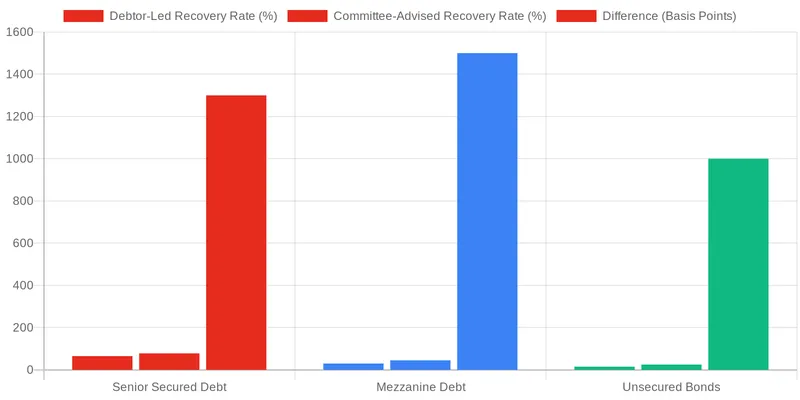
Financial advisors provide objectivity and market intelligence. They perform detailed valuations using methodologies like Discounted Cash Flow (DCF) and comparable company analysis to establish a credible range of values. This valuation underpins the negotiation, determining how the “restructuring pie” is divided. Their strategic advice helps shape proposals that are economically sound and politically achievable, balancing stakeholder demands to forge a consensual agreement.
Elevate Your Restructuring Expertise at DD Talks Events
The European restructuring landscape evolves with economic shifts, regulatory changes, and legal strategies. Staying ahead requires continuous learning and networking. DD Talks is a platform for leaders in private credit, NPL, and distressed debt to connect and analyze market challenges and opportunities.
Our conferences in London, Madrid, and across Europe facilitate in-depth discussions on negotiating with creditor committees and executing complex cross-border deals. Engage with GPs, LPs, and advisors from institutions like Blackstone, Ares Management, and Goldman Sachs. For our upcoming NPL and Distressed Debt Forums, Request Agenda and secure your place. Discover our events at ddtalks.com.
Conclusion
Negotiating with creditor committees is a critical skill in European restructurings, requiring financial acumen, strategic communication, and an understanding of legal frameworks. Thorough preparation, proactive management of intercreditor dynamics, and expert advisors help stakeholders preserve value and achieve corporate turnarounds.
To deepen your expertise and connect with experts in the field, explore DD Talks. Request Agenda for our next event or contact us.
Frequently Asked Questions
What is the primary function of a creditor committee in a restructuring?
A creditor committee’s main role is to represent the collective interests of a specific creditor class, such as senior lenders or bondholders. This streamlines the restructuring process by creating a single, unified voice for negotiation with the distressed company, avoiding chaotic individual discussions. The committee’s formation is a critical step before substantive discussions can begin.
What is the key to successfully negotiating with creditor committees?
The key to successfully negotiating with creditor committees is presenting a credible, transparent, and well-supported business plan for the distressed company. Providing clear financial projections and a viable path to value recovery builds essential trust and demonstrates a better outcome than liquidation. This approach is fundamental to achieving a consensual agreement.
What are the biggest challenges when negotiating with creditor committees in cross-border European cases?
A major challenge involves navigating the diverse and sometimes conflicting legal frameworks across different European jurisdictions. When negotiating with creditor committees, advisors must manage varying insolvency laws, enforcement rights, and court procedures. Reconciling these differences to create a single, cohesive restructuring plan that is acceptable to all parties is a complex task.
How are ad hoc committees different from official committees in European restructurings?
Ad hoc committees are formed informally by a group of creditors, often before a formal insolvency process begins, to coordinate their strategy and increase their collective bargaining power. In contrast, official committees are formally appointed within a statutory insolvency proceeding, granting them specific rights and duties under the law. Both types play a crucial role in shaping the dialogue with the debtor company.
How do you manage conflicting interests when negotiating with creditor committees from different debt tranches?
Managing inter-creditor conflict requires a deep understanding of the priority waterfall established in intercreditor agreements. The restructuring plan must respect the legal rights and priorities of each creditor class, from senior secured to junior unsecured. Successful negotiating with creditor committees often involves offering different incentives or demonstrating that the proposed plan provides the best possible risk-adjusted recovery for each distinct group.
How can professionals sharpen their skills for complex restructuring negotiations?
Professionals can sharpen their negotiation skills by attending specialized industry forums focused on distressed debt and NPL workouts. Events like those hosted by DD Talks bring together market leaders, advisors, and institutional investors to discuss real-world case studies and advanced strategies. To see the topics and experts featured at our next European summit, you can request the official agenda.


0 Comments